Put your chimney repair in order
- Locate the affected face. Mark which chimney breast shows staining and whether rain arrives from a particular direction. This helps target the exposed face.
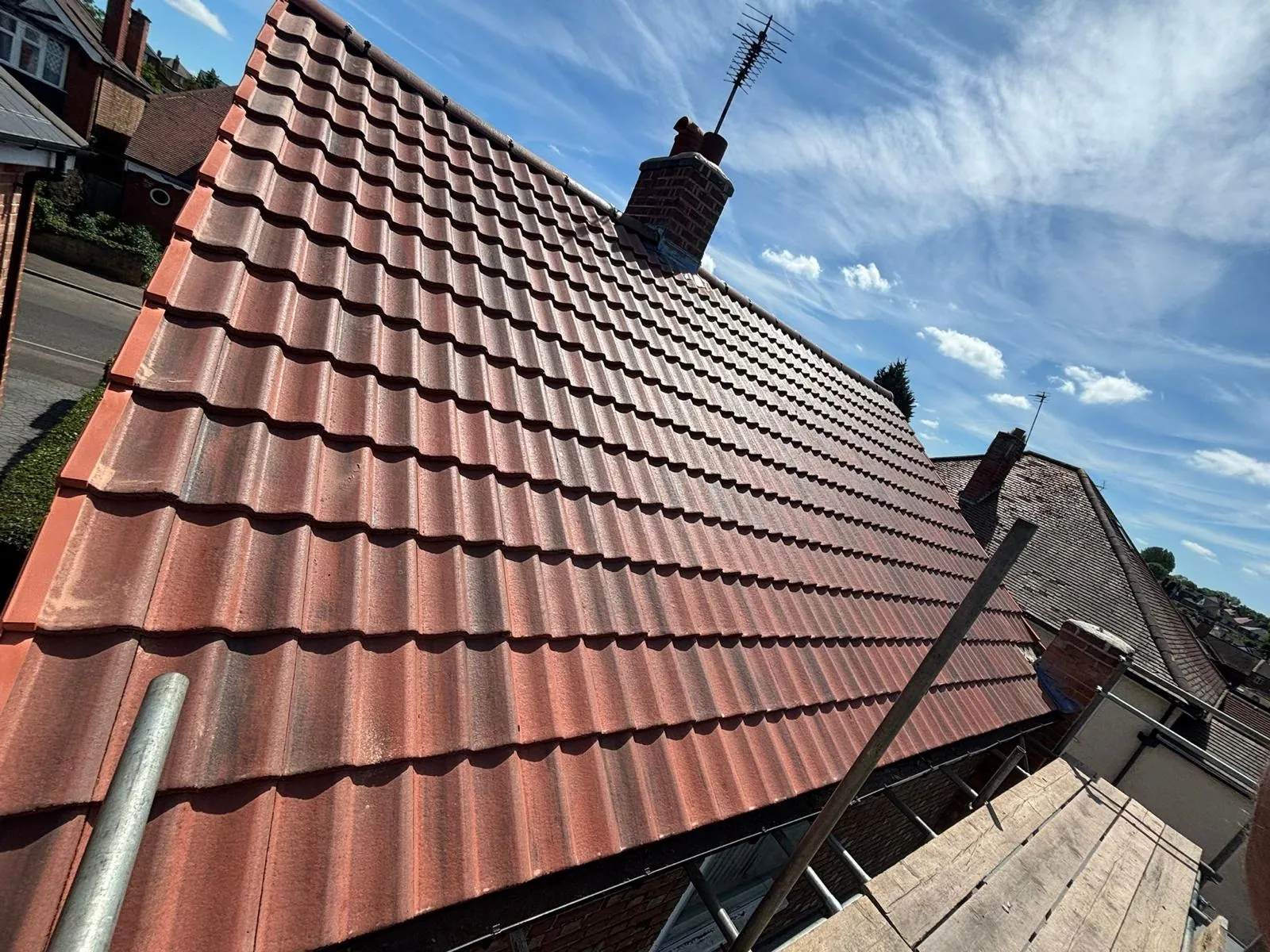
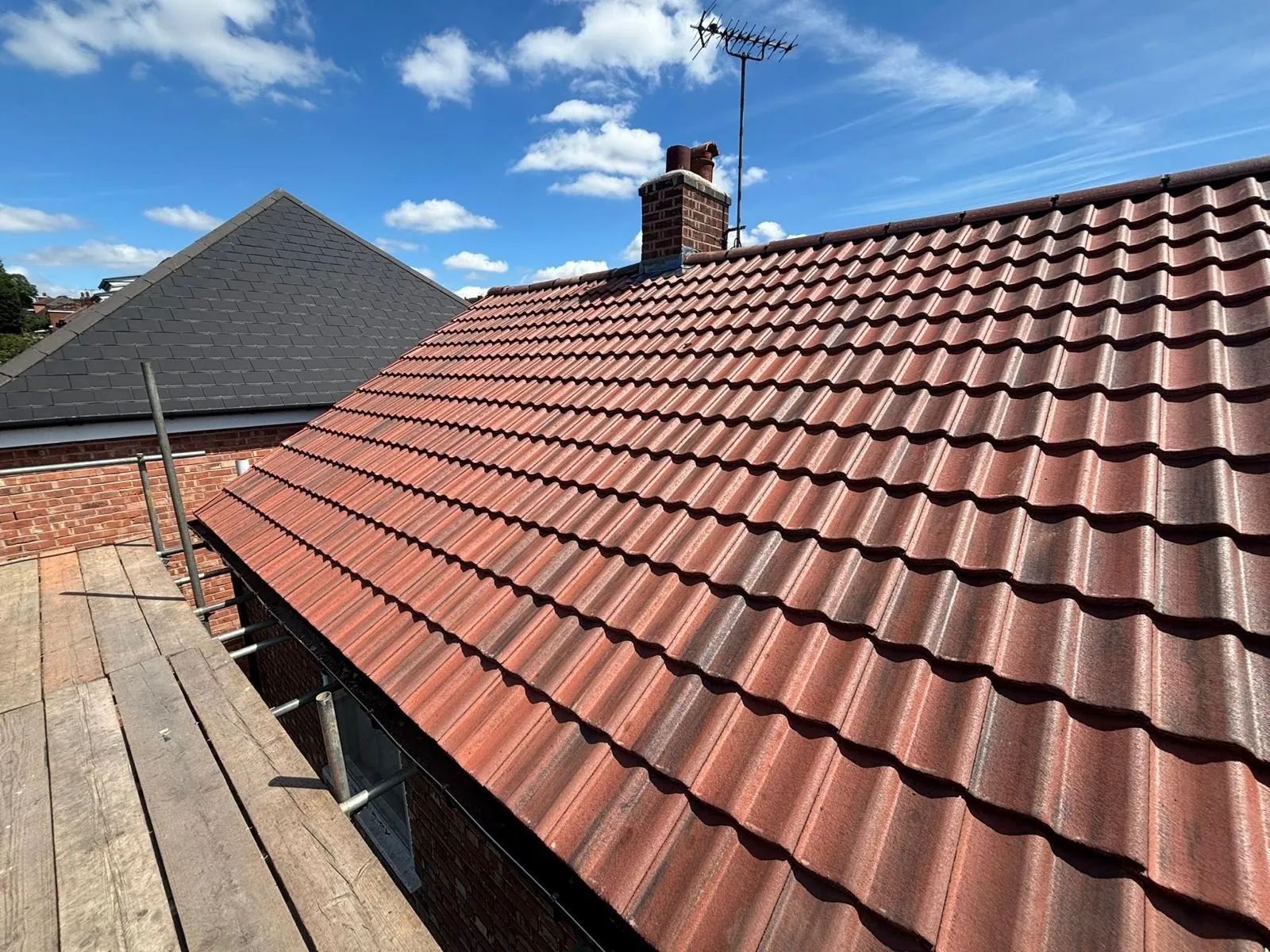
- Arrange a working platform. Chimney height and position determine the scaffold layout. Space beside the stack matters when mortar needs removing from several faces.
- Prepare the masonry. Loose mortar needs careful removal to leave a firm joint for repointing. Covering a crumbling surface leaves weak material behind.
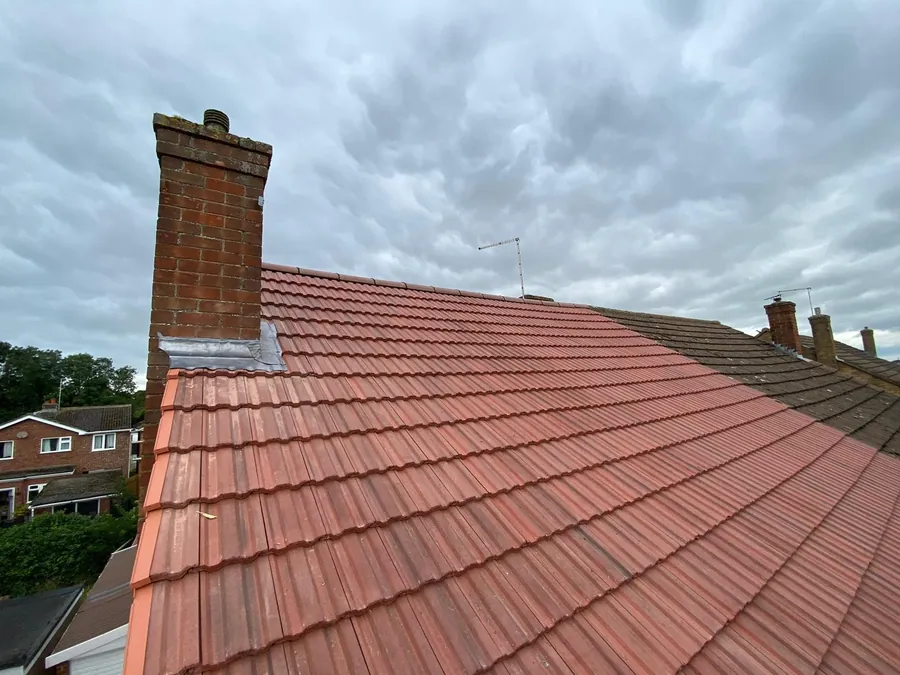
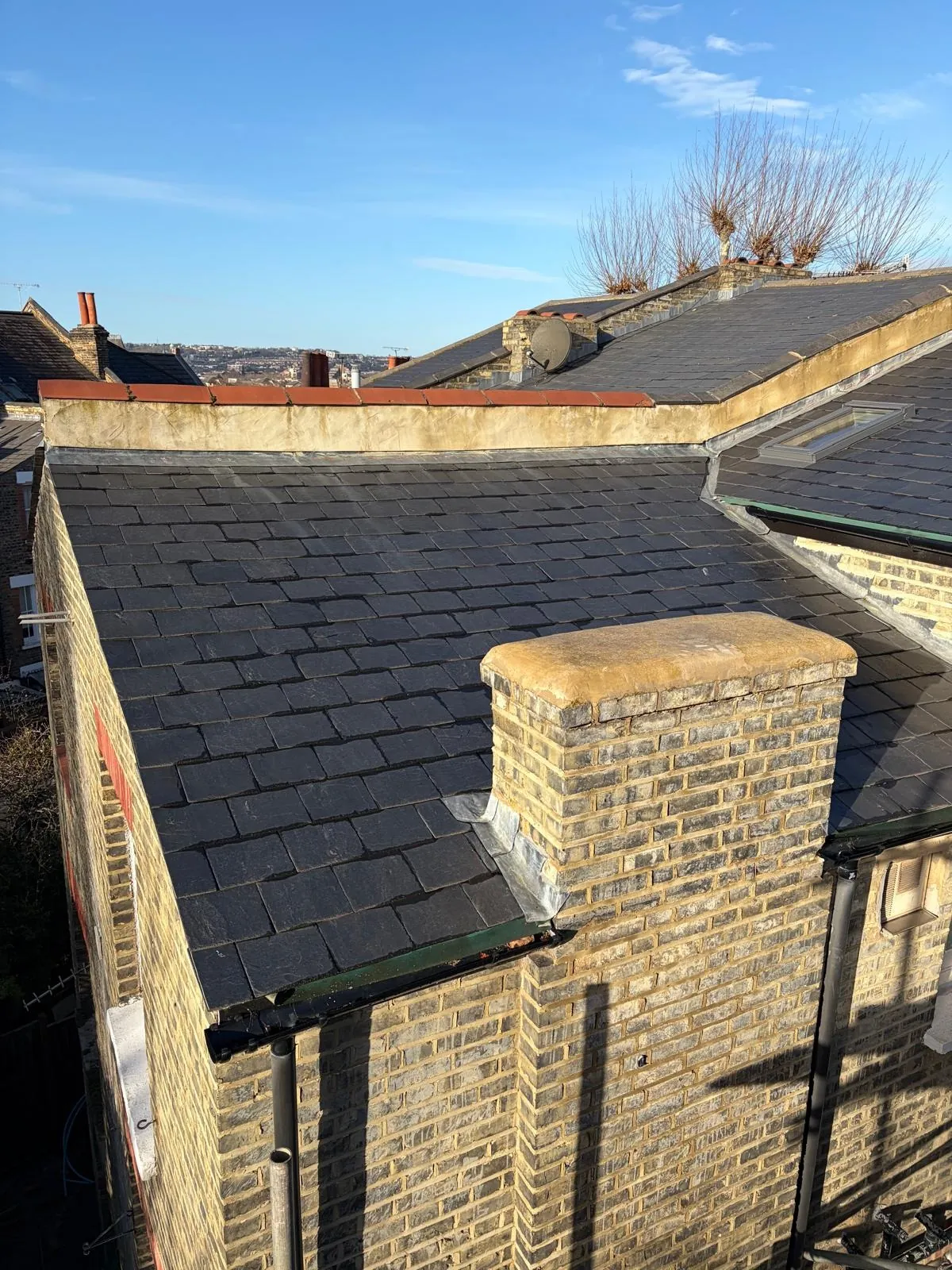
- Form the weathering details. Repaired lead needs enough overlap to shed water onto the covering below. Corners need particular care where several pieces meet.
- Review the repaired junction. The finished repair needs clear drainage past the stack. Check the agreed scope against the completed masonry and leadwork before handover.
Changes worth checking on your stack
- Mortar grains collecting below the chimney
- A visible gap behind stepped lead
- Brick faces breaking into thin flakes
- Fresh staining after sideways rain
Choose the work your stack needs
- Targeted joint repair. Local repointing suits a defined patch of deteriorated mortar. The remaining joints need enough strength to support that limited scope.
- Wider repointing. Several weathered faces call for a broader masonry specification. Joint depth and mortar suitability matter more than a cosmetic surface coat.
- Lead junction renewal. Renewal addresses lead that has split or lost its shape. The replacement detail must accommodate movement between masonry and roof.
- Combined weathering repair. Where masonry defects and failed lead overlap, both belong in the repair plan. Treating one leaves the other rainwater route open.
How long it takes
A compact chimney repair can fit within a short working visit once access is ready. Repointing several faces takes longer, with preparation and suitable drying conditions controlling progress. Scaffold installation is a separate stage. Wind at stack height and persistent rain affect the working window, so agree the sequence before booking.
What affects the price
- Stack height above the roof slope
- Number of masonry faces requiring attention
- Length and complexity of leadwork
- Scaffold position around neighbouring roofs
Request your free chimney quote to put the masonry, leadwork and access into one priced scope. Get your free quote.
Looking after it afterwards
Watch the chimney breast through subsequent wet weather and keep a record of any fresh marks. Existing masonry moisture takes time to dry, so distinguish an old stain from new wetness. Keep the repair details for future roof work, and report fallen mortar or changed lead edges without climbing onto the roof.